
De-escalation Techniques: Talk Someone Down
Podcast: Play in new window | Download
I like to say that the best way to deal with a problem is to avoid it, and de-escalation is one of the most practical ways to do that. The catch is that the moment you'll most likely need de-escalation techniques is also the moment they'll be hardest to use, because you may be the one who's angry and ready to argue.
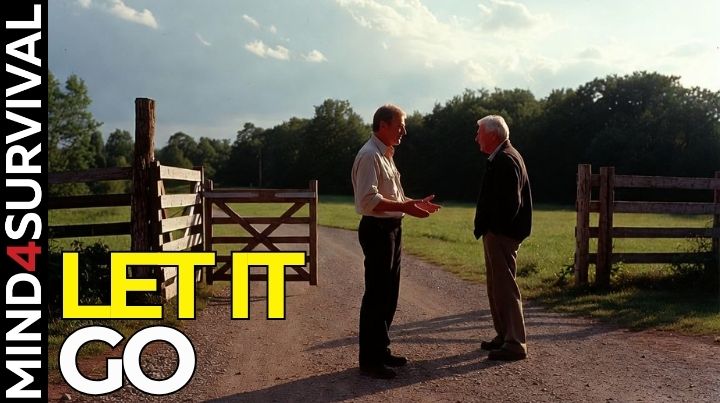
Think about the last argument you couldn't walk away from. What kept you there? Often, it's the need to have the last word. De-escalation is a skill anyone can learn, and it works everywhere from a heated moment with a loved one or a neighbor to a tense encounter after a disaster, when help isn't coming. The hard part is letting the other person have the last word.
Here's how to read the other person, where to stand, what to say, when to walk away, and how escalating can hurt you physically and legally.
TL;DR: De-escalation often fails because someone needs to win, and that includes you. Figure out whether the anger is emotional or predatory, stay outside arm's reach at a slight angle with your hands open, and speak slower, lower, and with fewer words. Give the other person a way to back out, and leave if talking stops working.
Why Most De-escalation Fails: You're Trying to Win
Advice on de-escalation techniques often focuses on voice, posture, and distance. However, one key reason de-escalation fails has nothing to do with technique. It fails because the people involved are emotionally invested and want to win. That emotional investment means the central nervous system is already responding, and in a confrontation, the response is usually a fight response.
That applies to you, too. It might be a disagreement with a loved one, a neighbor upset about a property line, or a stranger at your gate after a disaster when police aren't coming. If you need the last word or need to prove a point, you may lose the chance to de-escalate before things get worse, and you keep the fight response going on both sides.
Former FBI agent Joe Navarro and his co-author write that there is nothing to win in an emotional confrontation and that the goal is to restore calm.
Once a disagreement escalates, it can lead to hurt feelings, damaged relationships, and violence. When the rule of law breaks down after a disaster, violence happens more easily, which makes it even more important to defuse situations early. Once a situation turns physical, you lose control of how it ends.
De-escalation lowers the odds of violence, but some people will attack anyway. Any time you use these techniques, be prepared to take physical action at any moment. Put time and distance between you and the other person, keep your open hands up in front of you, keep your weight balanced, and have a plan for how you'll protect yourself and get away.
First, Read What Kind of Anger This Is
De-escalating an angry person starts with figuring out what's driving the anger, because different kinds of anger call for different responses.
Emotional anger is a reaction. Someone feels insulted, cheated, scared, or ignored, and the fight response starts. That person usually wants something: to be heard, to get an apology, to have a problem fixed, or to vent. Emotional anger can often be talked down because you have something to offer, and listening is usually the first thing.
Predatory aggression works differently. The person has already picked a target, and the argument is a pretext to close distance, test you, or distract you. There's usually nothing to negotiate, so talking accomplishes little. If what the person says and does doesn't add up, back away and leave.
Alcohol and drugs also change how you de-escalate aggressive behavior, because they slow a person's thinking and make him or her less predictable. Someone in a mental health crisis may not process what you say the way you intend. In both cases, keep your words short and simple, keep your distance, and know where your exit is.
Distance and Angles: Your Body Talks First
The other person is reading your body language before you say a word. When I worked diplomatic protection overseas, keeping my own body language calm in a hostile room mattered as much as reading everyone else's.
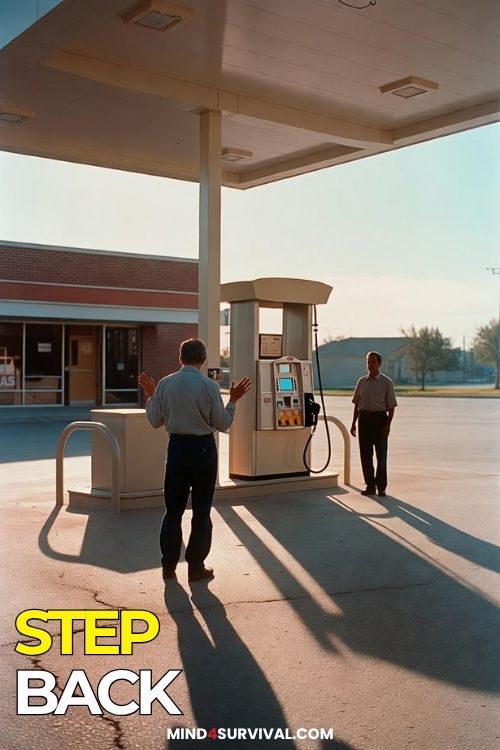
Start with distance. With a stranger, there's no reason to be within arm's reach. Self-defense instructors generally teach you to stay outside the other person's reach, so they have to step toward you to strike or grab you. That step gives you a warning and a moment to react. If the person moves closer, step back or to the side to keep the gap.
Face the person at a slight angle instead of squaring up, because standing toe-to-toe reads as a challenge. Stay mobile the way a boxer does, able to move forward, backward, and side to side, and don't cross your feet. Keep your hands open, visible, and above your waist, and avoid pointing and sudden movements.
Before you speak, note two exits: one for you and one for the other person. Someone who feels cornered has fewer options besides fighting.
Voice and Words: Slower, Lower, Fewer
Verbal de-escalation means using your voice and words to lower the tension. Speak a little slower and a little quieter than the other person, and keep your sentences short. Someone in a fight response thinks with the emotional brain, and every extra word is another potential trigger.
Don't tell an angry person to “calm down.” It tends to sound dismissive and often makes things worse. The same goes for “you need to,” “what's your problem,” and anything that sounds like a lecture. Use the word “you” sparingly, since it can sound like an accusation, and talk about the situation instead.
When you're trying to de-escalate an argument, remember TACOS: don't threaten, argue, challenge, order, or shame.
You can acknowledge someone without agreeing with him or her or admitting fault. Saying “I can see you're upset” or “I hear you” tells the person you're listening, and the person no longer has to keep pushing to be heard.
Practice now by thinking back to past arguments and rehearsing what you'll say instead, such as “I hear you,” “I don't want any trouble,” or “I'm going to head out.” That rehearsal primes your OODA Loop: observe, orient, decide, and act. Because you've already decided on your response, the words are ready when stress hits.
Give Them an Exit, and Take Yours
People back down more easily when they can do it without looking weak. If the issue doesn't really matter, let it go and give the other person the win.
An off-ramp can be as simple as “Fair enough, I'll get out of your way,” “Let's both go about our day,” or “My bad, it won't happen again.” The goal is to hand the other person a reason to stop.
Sometimes the better move is to disengage instead of de-escalate. If the person isn't responding to anything you say, keeps closing distance, or is trying to provoke you, stop talking and leave.
How you leave matters. Don't turn your back. Step away at an angle and move in an arc so you keep the person in view. Head toward other people, or put something like a car or a counter between you.
If he or she follows you, don't go home or to your car. Go toward other people and call 911 if you can; if you're already driving, head to a police or fire station. Part of avoiding a fight is deciding ahead of time that leaving can be part of the plan.
When Talking Stops Working: Signs It's About to Turn Physical
When trying to de-escalate a violent situation, watch the other person's body more than his or her words, because people often signal what they're about to do before they do it.
Warning signs include clenched fists, a tight jaw, pacing, rocking back and forth, a hard stare, and a sudden change in tone or behavior. That last one is a shift from the person's baseline, so someone who was shouting and suddenly goes quiet deserves your full attention. Overseas, I used reading body language as my main tool to keep people safe, starting with the hands, what the person was holding, and where his or her eyes were moving.
No single sign means an attack is coming, and the absence of signs doesn't mean one isn't. When you see several in one person, you're at red on the Cooper color code, where your attention is focused on a threat. At that point, stop talking, move, and be mentally ready to defend yourself.
As adrenaline rises, your heart rate climbs, your focus narrows, and fine motor skills get harder. Slow breathing can help bring your heart rate down and keep your rational brain engaged. If the person closes in, create distance, say “Stay back!” loudly and clearly, and get to a place where you can call 911.
The Legal Side: Escalating Can Cost You Your Self-Defense Claim
Arguing back can hurt a self-defense claim, depending on what you say and do. Under self-defense law, the person who first threatens or uses physical force is generally considered the initial aggressor, and an initial aggressor usually can't claim self-defense.
Threats count. If you tell someone, “Keep talking and see what happens,” you may be treated as the one who made the first threat, even if they throw the first punch. In some states, deliberately provoking a fight can also limit or remove a self-defense claim. State laws vary, and some states require you to retreat before using deadly force if you can do so safely. Self-defense also applies in civil lawsuits and criminal cases.
Cameras are almost everywhere, and a video of you trading threats can undercut your account even if the other person started it.
I'm not an attorney, and this isn't legal advice. Learn your state's self-defense and duty-to-retreat laws, talk to a lawyer licensed in your state if you have questions, and don't say anything in a confrontation that you wouldn't want a jury to hear.
After It's Over
Start by getting somewhere safe. As the adrenaline wears off, you may shake, feel drained, or replay the encounter in your head.
Within the hour, write down what happened while it's fresh: what was said, who saw it, and where any cameras were. If the person threatened you, followed you, or damaged your property, report it to the police. That record helps if the situation comes up again.
The incident doesn't always end when the threat does. If it turned physical or the police got involved, a legal case may follow.
Affiliate disclosure: I've been a member of Attorneys on Retainer for years,, and the program sponsors the show. It's a self-defense legal protection program backed by a law firm. I'm an affiliate, so I'm compensated if you sign up with my code. Use promo code M4S at attorneysonretainer.us for $25 off the one-time sign-up fee.
The Bottom Line
De-escalation starts with you. The other person may be in a fight response, but your own need to win can keep the argument going just as easily. Read what kind of anger you're facing, keep your distance and an angle, speak slower and lower, and give both of you a way out. Watch for signs that talking has stopped working, and be ready to act if it does. Whether it's a dispute over a property line or a stranger at your gate after a disaster, the goal is to get yourself and your family home safe.
Additional Resources
- Cooper's Color Code: 5 Levels of Situational Awareness
- How to Spot Trouble Before It Starts: Situational Awareness Tips
- Everyday Situational Awareness: 5 Risky Situations
- Crowd Safety: How to Stay Safe When a Crowd Turns
FAQ
Walk away when the person isn't responding to anything you say, keeps closing distance after you step back, seems to be using the argument as a pretext, or is trying to provoke you. At that point, talking accomplishes little. Step away at an angle, keep the person in view, and head toward other people.
Stay outside arm's reach, so the person would have to step toward you to strike or grab you. That step is a warning, and it gives you time to react. Stand at a slight angle with your hands open and visible, and step back or to the side if they move closer.
Avoid “calm down,” “you need to,” “what's your problem,” and anything that sounds like a lecture. A simple way to remember what to avoid is TACOS: don't threaten, argue, challenge, order, or shame. Short, neutral lines such as “I hear you” or “I don't want any trouble” work better.
It can. The person who first threatens or uses physical force is generally considered the initial aggressor and usually can't claim self-defense, and in some states, provoking a fight can limit a claim. Phone video of you trading threats can also undercut your account. Check your state's laws, and talk to a lawyer licensed there.
De-escalation calms a tense moment so nobody gets hurt, often with a stranger. Conflict resolution settles a disagreement with people you know, such as family or group members, once everyone is calm. For that kind of disagreement, see Jim Cobb's article on conflict resolution at Mind4Survival.
Related Articles


FREE Guide
Read the Best Seller

Join Mind4Survival
Stay informed by joining the Mind4Survival! 100% Secure! 0% Spam!

Affiliate Disclosure...
Mind4Survival is a free, reader-supported information resource. If you make a purchase through our link, we may, at no cost to you, receive an affiliate commission.
Do You Want To Be Ready No Matter What?
Download our free 39-page guide with interactive, 7-Day Emergency Kit Checklist and take the first step toward real preparedness.
- Know exactly where to start.
- Save time and money.
- How-to build a complete Basic Emergency Kit.
- Level up your safety and security.

Join Mind4Survival
Stay informed by joining the Mind4Survival! 100% Secure! 0% Spam!