
7 Tips to Get Your Family On Board With Preparedness
Podcast: Play in new window | Download
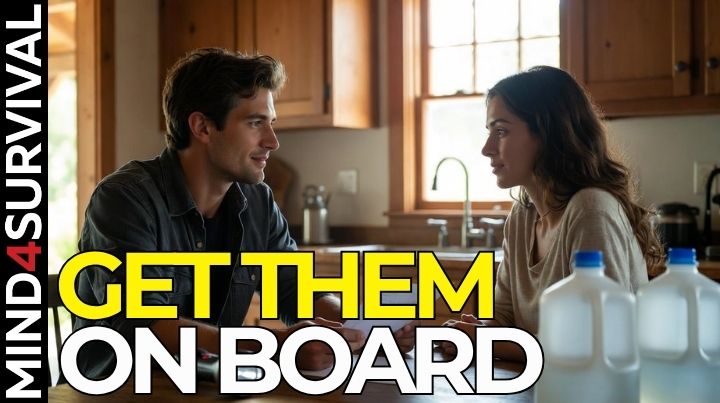
Your spouse, parent, child, or friend may not be against being prepared. He or she may be against something else: what prepping looks like from the outside, the discomfort of thinking about bad times, a budget that's already tight, or a schedule with little free time in it. Some people are against all of it. Most aren't, and the difference matters, because those are different problems with different solutions.
Money and time are two common obstacles to preparedness. The third thing that stops people from preparing isn't a thing. It's a person.
When I asked Mind4Survival readers what holds them back, several pointed to the people in their lives. Dan started to answer money, then settled on getting others on board. Sara listed a spouse who doesn't see a threat. Todd pointed to family who think preparedness only means SHTF (when the stuff hits the fan) situations. Joan doesn't bring it up at home, to avoid looking like the person always thinking about the end of the world.
If that sounds like your house, getting your family on board with preparedness starts with knowing why he or she says no. From there, seven tips can bring him or her along without a lecture, a fight, or scare tactics.
TL;DR: Getting your family on board with preparedness starts with finding the real reason for the no. It's usually normalcy bias, worry, the belief that someone else will handle it, the prepper label, or a lack of money or time. Start with what your family already does, ask instead of lecturing, set the budget together, and give everyone a job. Slow progress is still progress.
Why They Say No
First, know what he or she is objecting to. Episode 57 of the podcast laid out five reasons people don't prepare, and four of them match what members of the Mind4Survival Facebook group have shared recently.
Reason 1: Normalcy Bias
You know the risks and explain them rationally, and you still run into an attitude of “That won't happen. We're fine. You worry too much.” That belief is normalcy bias talking. It is the force behind the mental gymnastics required to reach that conclusion.
A person with active normalcy bias is doing what many people do. Humans rely on pattern recognition, using past events to predict future ones. If nothing happened yesterday, the pattern says nothing will happen tomorrow. Until that assumption gets a crack in it, you're likely to be fighting an uphill battle the whole way.
Reason 2: Worry
Worry comes across as avoidance. Worrying is uncomfortable, so people avoid it with some version of “I don't want to think about that.”
Bring up a week without power, and his or her mind goes to the worst version of it. The fastest way to stop that feeling is to end the conversation, so that's what happens. Push harder, and you get more pushback. The problem isn't that your loved one doesn't understand the risk. He or she understands it and would rather not think about it.
Reason 3: Someone Will Handle It
“That's what insurance is for.” “The county has a plan.” “Your brother has a generator.” Episode 57 used Hurricane Katrina as the counterexample, and there have been more since.
This one is the path of least resistance, and on most normal days it isn't a dangerous way to think. In developed countries, if you call for an ambulance, one usually shows up, even if it takes a while. The problem is that the system probably won't work well if it becomes unglued and falls apart during a really disastrous time. If you plan on someone saving you, you may set yourself up for problems. You are your only guaranteed first responder.
Reason 4: The Label
Paul, in the Mind4Survival Facebook group, put it this way: “I fully accept that I may just be a paranoid survivalist who doesn't trust the government. They are happy with their own interests and hobbies.”
Many spouses have no problem with extra water in the garage. The problem is having a prepper in the family and what the neighbors or in-laws might think. Joan's survey answer is the same objection from the other side of the table.
Reason 5: No Money or No Time
Money and time are separate obstacles with their own articles. If one of them is the real objection, learning to budget for prepping or fit it into the schedule in a way that makes sense to your loved one gives you a better chance of getting buy-in.
Figure out which of these you're dealing with before you say another word about prepping. That is situational awareness applied to your own household, because you're learning what makes this person tick. The tips that follow work on all five reasons, though not in the same order for each one.
Start With What They Already Do
Your loved one already prepares. He or she just doesn't call it that. Car insurance, a savings account, a spare tire, a smoke detector, filling the gas tank before a storm, buying the big pack of toilet paper because it's cheaper, and a secure nanny cam for the kids all count. Most people don't call that prepping, and it is: making the effort today for a better tomorrow.
That matters because you're not selling a new idea. You're pointing at an aspect of preparedness he or she already believes in. That is a crack in the normalcy-bias egg and a step closer to where you hope his or her preparedness will be. The big pack of toilet paper for a storm is closing in on the sensibility of a bidet, which adds a layer to your hygiene PACE plan.
The Mind4Survival book puts it in Maslow's terms. Food, water, shelter, and safety sit at the bottom of the pyramid for every person alive. Your spouse has outsourced them to the grocery store, the water company, and the power grid, and hasn't had a reason yet to ask what happens when one of them fails.
You don't have to convince your loved one to get completely on board right now. Look for ways to expand his or her appetite for prepping while you improve your own preparedness along the way. Preparedness is a marathon, not a sprint.
7 Tips to Bring Them On Board
1. Lead With the Ordinary Problem
Because your loved one already prepares, each of those habits sits close to a related prep. Filling the tank before a storm is very close to keeping a couple of spare 5-gallon cans of gas treated with STA-BIL, just in case. If you have a smoke detector, you might as well have a couple of fire extinguishers ready to go to fight the fire that causes the smoke. Scott, in the Facebook group, said knowing his family has an extra level of insurance makes him more comfortable. That's the frame. Nobody argues with insurance.
So skip the collapse scenarios. Talk about the ice storm that took power out for a couple of days, the layoff, or the boil-water notice someone you know received somewhere else. Let current events speak for themselves, and don't beat people over the head with them. If you want something to share that doesn't come from a prepper, Ready.gov's Make a Plan page is a plain government starting point.
Todd's survey answer captures the point. If prepping means SHTF in the other person's head, the conversation ends before it starts. A week without power is a problem he or she may get on board with solving, regardless of your society-crippling predictions.
2. Ask, Don't Lecture
Episode 57 described this as coaching: draw the answer out of the other person instead of delivering it. DivaKay, in the Facebook group, put it this way: “I just simply ask them what they would do if the power went out and what they would do to survive it.” Then stop talking. An answer a person reaches on his or her own is more likely to stick.
A short, simple “What would you do?” shows you where the other person's mind is and can open the door to a more in-depth conversation. If it does, don't be the bull in the china shop. Treat the conversation lightly and get a couple of wins, so he or she is more likely to come back to it later. After all, progress is preparedness.
3. Make the Idea Theirs
Episode 57 also covered the trash can theory of management. Don't ask, “Should we store water?” Ask, “Should we put the water in the garage or the basement?” Either answer gets water stored. Keep it simple by offering two or three options you can live with, and let him or her pick.
People like to feel that their opinion is valued, and when they do, they're more likely to go farther down the preparedness path with you. That's called getting buy-in.
4. Set the Budget Together
If money is the objection, don't argue about it. Sit down, agree on a dollar amount to budget over time, and stay within that number. That turns prepping from something one person is always spending money on into something you both decided on together and can both live with.
As the prepper, you may want the gear faster, and patience is something to work on in yourself. Use your risk profile to decide where the money goes. It gives you a logical point for the discussion: here's the objective information, here are the greatest risks, here's how to cover them, and here's the budget.
5. Let the Preps Do the Talking
The first time the extra food in the pantry gets you through a short paycheck, or the generator powers the fridge through an outage, the debate over those preps will probably be over.
Tony, in the survey, said he's made slow progress and now has the full support and cooperation of his wife. Slow progress is still progress. Don't rush it, and don't say “I told you so” when it pays off. Say nothing, and let him or her notice.
6. Everyone Needs a Job
Marcus made a great comment in the Facebook group about the people in his life. They will be the extra eyes, the mule, and the cook. He's joking a bit, and that's how it tends to work out.
A person with a role is on the team whether or not anyone calls it prepping. Ask your loved one to take responsibility for something he or she is interested in, which can lead to more buy-in and support over time.
7. Keep Going Without Them
Some people never come around. Lisa has prepped for 26 years with a spouse who never stopped her and doesn't prep. Suzanne explained her reasons and keeps preparing the way that suits her. Don't hide it, don't fight about it, and keep working on it.
It's one more layer of the preparedness onion. Even if you're the only one prepping, a prepared household with one prepper in it is still a prepared household.
The Bottom Line
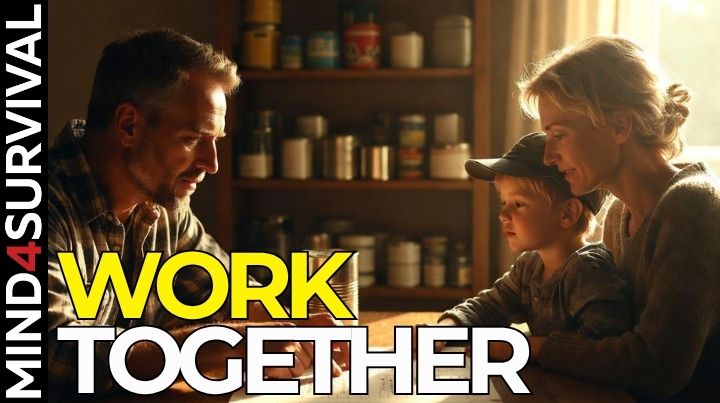
Getting your family on board with preparedness works the same way as every other part of preparedness. Find the real reason for the “no,” start with where he or she already is and what he or she already believes, and take one step forward from there, then another. Slow progress is still progress, and as Tony's survey answer shows, it can end in full support. Treat getting your family on board as an important prep, the same as any other.
Additional Resources
FAQ
Most spouses who say no aren't against being prepared. The objection is usually normalcy bias, worry, the belief that someone else will handle it, the prepper label, or a lack of money or time. Find out which one you're dealing with first, because each one needs a different approach.
Lead with ordinary problems they already understand, such as a power outage that lasts a few days, a layoff, or a boil-water notice, and skip collapse scenarios. Ask what they would do if the power went out instead of lecturing, then listen. Keep the conversation light and aim for a couple of small wins.
Keep preparing. Some people never come around, and you can still build your household's preparedness without fighting about it or hiding it. A prepared household with one prepper in it is still a prepared household, and slow progress over time can still lead to full support.
Sit down together, agree on a dollar amount to spend over time, and stay within it. Use your risk profile to show where the money should go based on your household's greatest risks. A shared number turns prepping into a decision you made together instead of one person's spending.
Normalcy bias is the assumption that tomorrow will look like today. Because nothing happened yesterday, a person with normalcy bias expects nothing to happen tomorrow and dismisses evidence to the contrary. It is one of the five reasons people give for not preparing, and it is often the first one preppers run into at home.
Related Articles
FREE Guide
Read the Best Seller

Join Mind4Survival
Stay informed by joining the Mind4Survival! 100% Secure! 0% Spam!

Affiliate Disclosure...
Mind4Survival is a free, reader-supported information resource. If you make a purchase through our link, we may, at no cost to you, receive an affiliate commission.
Do You Want To Be Ready No Matter What?
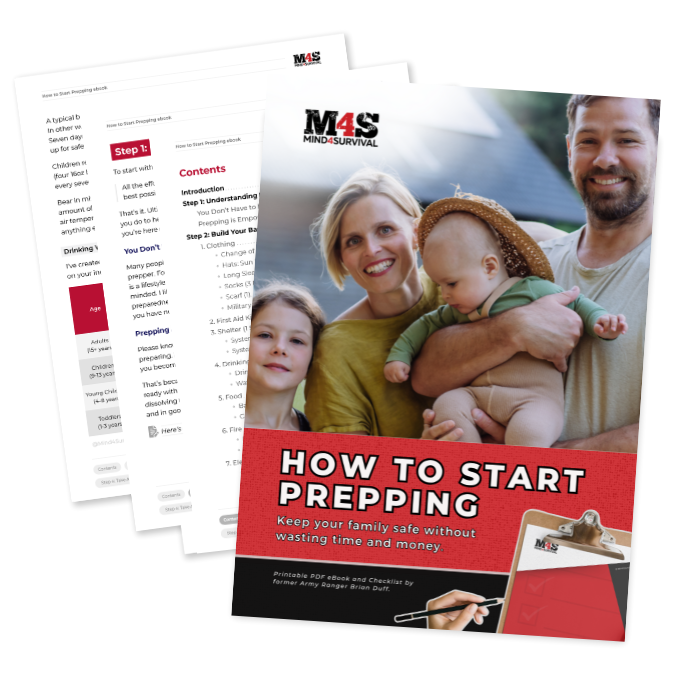
Download our free 39-page guide with interactive, 7-Day Emergency Kit Checklist and take the first step toward real preparedness.
- Know exactly where to start.
- Save time and money.
- How-to build a complete Basic Emergency Kit.
- Level up your safety and security.

Join Mind4Survival
Stay informed by joining the Mind4Survival! 100% Secure! 0% Spam!