
Prepping Shrinks Your Circle
Podcast: Play in new window | Download
When the Mind4Survival Facebook group was asked whether being prepared had isolated them from other people, Chuck wrote: “that was kind of the whole point.”
That was the Captain Obvious answer, but not everyone saw it that way. About half the group said yes. The other half said no. But when you read what they wrote, many described the same thing. Their circle had gotten smaller.
That matches my experience. Prepping shrinks your circle. It changes who you spend time with in your community and at work, and it can change the conversations you have at home. Keeping quiet about your preps adds to it. So does choosing to live farther away from people. Much of it is a choice, and for me, it's a trade worth making.
In this article, I'll walk through where that narrowing comes from, who tends to stay in your circle, how to help the people outside it, and how to stay social when your circle is smaller.
Prepping shrinks your circle. It steers you toward people who share your mindset. It can strain conversations at home, and keeping your preps private or living rural adds distance. Much of that is a choice, and often a good trade. The fix isn't giving up privacy or prepping. It's choosing who stays, helping people outside your circle without pushing, and building regular, purpose-driven contact with friends and neighbors.
TL;DR: Prepping shrinks your circle. It steers you toward people who share your mindset. It can strain conversations at home, and keeping your preps private or living rural adds distance. Much of that is a choice, and often a good trade. The fix isn't giving up privacy or prepping. It's choosing who stays, helping people outside your circle without pushing, and building regular, purpose-driven contact with friends and neighbors.
How the Circle Shrinks
Preparedness steers you away from people who aren't into it. Over time, that narrows your circle down to people who see things the way you do. Many preppers notice it, even those who don't think prepping caused it.
When the Mind4Survival Facebook group was asked whether being prepared had isolated them, several people said no and then described a smaller circle anyway. Suzanne said it was her personality, not prepping. I can relate to that. Catherine said it was other people showing who they really were. That makes sense, because we have different expectations about how we view the world, how we go about things, and our values. Erik said he's met more people through prepping, online and at training, but he isn't a people person to begin with, and he figures that's common among preppers.
Stuart said prepping didn't isolate him either. Over five decades of getting prepared, though, he chose to cut ties with some people. He said the answer would only be yes “if you asked: ‘In becoming prepared, have you decided to isolate yourself from some people?'”
Stuart's experience is closer to mine, and probably to many of yours. I don't care to be around people who don't care about even a small amount of preparedness, or people who look down on someone else's prepping. They don't have to be all in like I am. But I'd like them to at least be thinking, “I should probably have a week or two's worth of food stored up for the basic things, like the power outages that hit us.”
During COVID and other times in my preparedness life, the prepping community got looked down on and trash-talked. You're hoarders. You're this, you're that, because you're prepared. I find people who think that way are often disagreeable. We don't see eye to eye on much, if anything.
I'm not going to eliminate everybody from my life who isn't on board with a year's worth of food. But unless it's for some other reason—a club, a league, a class, or some other group that brings us together—I don't see a reason to spend time with them. I'd rather be around people who plan to be part of the solution. I like the mindset. I like the personalities. I like the conversations. I like the shared interests. I like preparedness-minded people.
It Happens at Home
The narrowing of our circle doesn't stop out in the community, at work, etc. It happens at home too.
We all see it discussed in prepper groups. In a lot of families, one person is the prepper. That's usually the person trying to tap dance around it and figure out how much prepping they can convince their spouse they need, and then push it a bit further. The money, the space in the garage, the time on a Saturday all come into play. Some preppers can't talk about prepping much at home. Some can't bring it up at all.
That came up again and again when group members were asked what's holding them back. Christina said her husband isn't as on board as she is. In another thread, Tony, who said he was prepping before prepping was a thing, said the hardest part is when your family doesn't seem to care or want to take part. That leaves it all on his shoulders.
That's a hard spot to be in. You're preparing for people who don't want to talk about it. We know how well that works out when times get hectic. You'll have ten minutes to get things moving during an emergency, and you're herding kittens because they didn't want to work on it in advance. You know that's coming, so you plan on it. That's part of the plan.
Denise's story shows the gap can close. Her prepping used to cause big fights with her husband. Then a job loss brought financial hardship, and they didn't need to spend money on groceries for months because of what she'd put away. A real event changed the conversation.
Keeping Quiet Keeps Distance Too
Yes, I talk about preparedness on the podcast. Locally, though, I don't talk about my preps. If it comes up, I'll nudge people toward preparedness with something like, “Hey, man, it's probably a good idea to get ready for that.” A few people know I wrote the book Mind 4 Survival. That's about as far as it goes.
A lot of group members keep their preps private on purpose. Stuart described it in levels. Acquaintances know nothing. Good friends know more. Nobody knows everything. If he thinks a friend would be skeptical of prepping, that friend learns nothing. Scott gave the reason: people who know you prep may expect you to share when things go bad.
That privacy has a cost. The same habit that protects your preps also keeps people at a distance. Prepping is a big part of your life, big enough that you're here learning about it, and you keep it quiet. When fewer people know what you do, fewer people know you well. That's part of the narrowing, and it's a choice.
Choosing Distance
I grew up in L.A., about 15 minutes from downtown without traffic. With traffic, that's a whole different game. I still spend a lot of time at my dad's place there, weeks if not months each year. I don't like the noise, the crowds, or the crime. I've lived in busy embassies, consulates, military bases, and other places around the globe. There's nothing quite like the non-stop hum of a military base in a war zone.
So, now, I chose to live in the country. I wanted the quiet, and I wanted distance from city crowds that could become a problem in the worst situations. No riots out here. It's county fairs, small-town parades, rodeos, and tractor pulls. You don't socialize with your neighbors much out here, either. There's distance between everybody, unless you see them down at the Dollar General.
Some members of the Mind4Survival Facebook group made the same choice. Timothy runs an off-grid homestead in a remote high desert area. When he was asked whether prepping had isolated him, he said yes, and that it's great.
That distance costs something. When it gets a good snow here, you're on your own for a while. Driving can be unsafe for days, and unless you can easily plow yourself out, you wait for the plows. Sometimes that takes days. And as often happens with snow and ice, multi-day power outages happen in the middle of it all too. They do a good job with the power out here, but you're not in a city with quick utilities.
Fire and EMS are rural. The hospital is a 20-minute drive. When I ate it on the ice and busted myself up badly enough to need stitches, that was a 20-minute drive after I picked myself up out of the snow. With the higher fuel costs, heading back and forth to town adds up. Not everyone can make that move, either. Lindy said she'd love to live somewhere rural and remote, but her mother lives with her and needs to be near medical care.
For me, the trade is worth it right now. Maybe it won't be at some point. There's a lot to be said for the convenience of living in town, as long as it doesn't drive you crazy. In the meantime, if the world turns upside down or locks society down again, living in the country is a good place to be. It's good for security, and it's good for the soul. It's not so good for socializing.
The Prepper Community You Keep
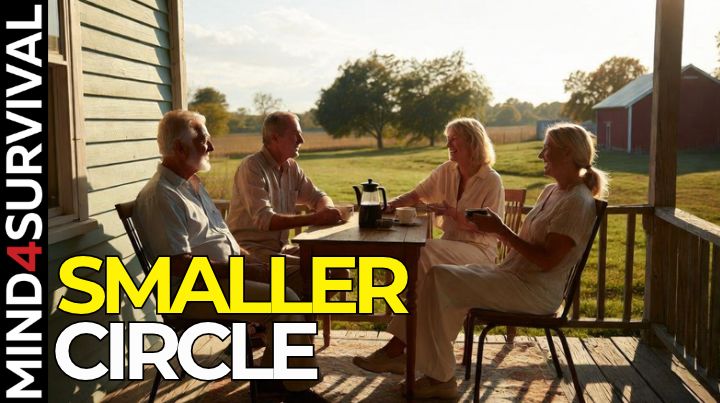
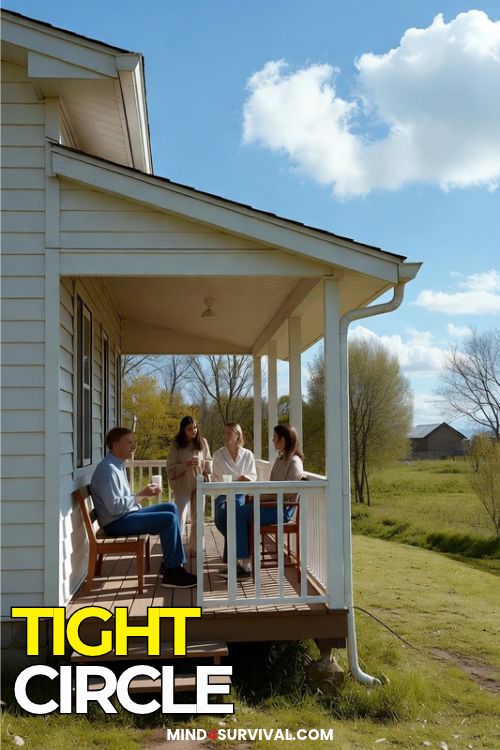
When your circle gets smaller, the people who stay in it are the ones you choose. That means it gets tighter. For many preppers, that includes other preppers. A lot of you have made friends with people on social media. Maybe you see them once every year or two at an event, and you chat with them the rest of the time.
When the Facebook group was asked what they like most about spending time with other preppers, the answer that kept coming up was relief at not feeling crazy. Others said they like learning from each other and trading ideas. One member met her partner at a prepper event.
That doesn't mean every prepper is reasonable. Some of us go over the top, Burt Gummer style, like the survivalist in Tremors. We can all have our moments. And some people are genuinely crazy, no matter what you do. But most people who prepare are good, down-to-earth people.
Helping People Outside Your Prepared Circle
Most of us still have friends and family outside our circle who believe in preparedness but stop at a first aid kit, a flashlight, and some extra food. I don't push them. When something happens in the world, I'll ask, “How would you have fared with that?” Now and then I drop a hint or some unasked-for advice, but not all the time. I want to plant preparedness seeds that grow into something helpful, not turn into walls against prepping.
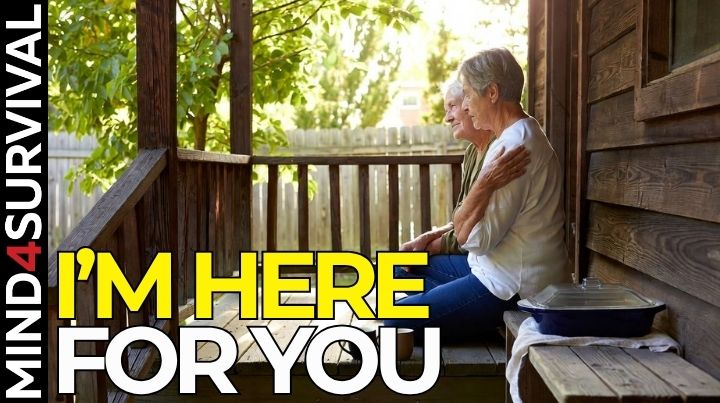
I also prep extra for them. Sometimes I leave food and other supplies with friends who I trust to put them away for when they need them. I tell them, “Humor me. Put it in the garage, the pantry, wherever.” Usually that'll buy them a week or more. They know it comes from a good place, and they usually humor me by putting it away and hanging on to it. I really like doing that.
The question always comes up: does that set you up for failure if they come back for more? Maybe, maybe not. If they come to me later for more, I'll decide then what I want to do.
You can also meet people through things you do together. When members of the Facebook group were asked about community resources, one said she has volunteered with her county fire department for 12 years. Others named volunteer fire and EMS, Civil Air Patrol, and local seed and plant swaps. Those are places where you meet people you wouldn't meet otherwise.
Staying Social in a Smaller Circle
Staying social is part of being prepared, even with a smaller circle. It's good for you and for the people around you. It also lets you keep a pulse on what's happening with people. When you meet people in person, you pick up on the energy and get more context. It's situational awareness.
We all know that being social is good for us. To an extent, we're herd animals. Community helps when we are at our worst and need a hand, and connection with others can also help us lead healthier, more fulfilled lives.
Here are a few ways to keep it going.
Set a regular time. A weekly coffee, a monthly dinner, or a standing phone call with a friend keeps people in your life without much planning.
Do things with a purpose. Classes, training, volunteer fire and EMS, a ham radio club, a fitness class, a partner or group, or some other group puts you around people who share an interest. Search and rescue is another option if you can do it. You learn something, and you meet people at the same time.
Know your neighbors. You don't have to tell them about your preps. Say hello, learn their names, and know who might need help or be able to help when something happens. Be nice. If they're decent people, take a basic interest in how they're doing. Wave at them. It's good for socializing, and you might pick up useful information from time to time.
Check in. If you haven't heard from someone in your circle in a while, call or text them. “Hey, man, how's it going?”
The Bottom Line
Prepping shrinks your circle. It happens with the people you used to spend time with. It can happen at home, and it happens when you keep quiet about your preps or move farther away from people. For a lot of us, much of that is by choice.
Preparedness works better when we work as a community, within the groups we've created. The connections you make before a problem help you recover after the problem.
Keep the people you want around, help the people outside your circle when you can, and make time to stay social. The prepping hub page has more on the mindset side of preparedness.
We all define our community. That's how the world works.
Additional Resources
- 7 Tips to Get Your Family On Board With Preparedness
- A Safe Family: Tips for Protecting Your Loved Ones
- Helping Your Family Cope When Disaster Strikes
- Things I Learned Traveling Abroad With My Family
FAQ
Does prepping isolate you?
Does keeping your preps private hurt your relationships?
It can. Keeping your preps quiet protects your supplies and keeps you from becoming the neighborhood fallback, but it also means fewer people know you well. Many preppers handle this in levels: acquaintances know nothing, good friends know more, and nobody knows everything. You can stay private about preps without being private about yourself.
Is living rural worth it for preppers?
It depends on your situation. Rural living means more quiet, fewer crowds, and distance from urban unrest. It also means longer waits for plows, power, fire, and EMS, and more driving to reach a hospital. People caring for someone who needs regular medical care may be better served staying closer to town.
How can preppers stay social with a smaller circle?
Build contact that doesn't rely on planning every time. Set a standing coffee, dinner, or phone call. Join groups with a purpose, like volunteer fire and EMS, a ham radio club, or a training class. Learn your neighbors' names, and check in on people you haven't heard from in a while.
Related Articles
FREE Guide
Read the Best Seller
Join Mind4Survival
Stay informed by joining the Mind4Survival! 100% Secure! 0% Spam!

Affiliate Disclosure...
Mind4Survival is a free, reader-supported information resource. If you make a purchase through our link, we may, at no cost to you, receive an affiliate commission.
Do You Want To Be Ready No Matter What?
Download our free 39-page guide with interactive, 7-Day Emergency Kit Checklist and take the first step toward real preparedness.
- Know exactly where to start.
- Save time and money.
- How-to build a complete Basic Emergency Kit.
- Level up your safety and security.

Join Mind4Survival
Stay informed by joining the Mind4Survival! 100% Secure! 0% Spam!