
What Is Prepping? The Definition Most People Get Wrong
Podcast: Play in new window | Download
Most people move through their day believing that tomorrow will happen pretty much like today. For most people, most days go well—right up until they don't.
You might string together years' worth of good days. But as preppers, we all know that eventually the bottom falls out. Maybe only for a short time, but at some point, we all experience loss. We all experience struggle. It can be a dangerous world at times.
Preparedness is what carries you through a day, or days, that are anything but normal and non-problematic. The power outage that lasts a week during a winter freeze. The career that Human Resources ends abruptly, without notice—you walk in one day, and next thing you know, there's a box. Grab your stuff, you're out. The urgent medical problem that comes on at two in the morning, and now you're headed to the hospital and missing work. It's also what has you ready for the good days—the promotion that opens up, the chance to start something of your own, the year you finally get out of debt, the first garden you plant or harvest, being ready to enjoy a much-needed vacation or whatever puts you in your happy place.
Preparedness is the ongoing work of making yourself more capable, more confident, and more in control, regardless of what tomorrow brings.
That's the whole idea behind Mind4Survival, and it's the starting point for the question this article answers: what is prepping, really?
TL;DR: Prepping is the ongoing practice of building the skills, supplies, and mindset to handle disruptions before they happen—from a busted water heater to a multi-day power outage. It's not about doomsday. It's about staying capable when normal life goes sideways.
The Prepping Definition Most People Get Wrong
Ask around, and you'll get a different answer every time, including from the people whose job it is to know and who make money saying they're part of the preparedness world.
As I discuss in my book Mind 4 Survival, the Department of Homeland Security calls preparedness a continuous cycle of planning, organizing, training, equipping, exercising, evaluating, and taking corrective action to ensure effective coordination during incident response. Yep, that's a long definition.
The cycle part is solid and covers many key aspects of preparedness. The end goal isn't that helpful. Coordinating a response is an administrative task, not a life-saving one. Nothing in the definition mentions saving a life or reducing what a family has to endure. If you're depending on that coordination to reach you, you might be waiting a while. It's the nature of the game, and we've seen it repeat disaster after disaster.
The New York State Department of Health goes the other way, defining it as the steps you take to stay safe before, during, and after an emergency or natural disaster. That's a good thing for covering people in hard times when they truly need help. But that works only if the only thing you're preparing for is something bad. It isn't.
Here's how I define preparedness at Mind4Survival:
“Preparedness is all the efforts taken to ensure survival, minimize unwanted struggle, and live your best possible life.”
Prepping is the practice of preparedness, so that definition covers both.
My definition does something the other two don't. It says what preparedness is for—why we prepare. And the part many in the preparedness world don't focus on is living your best possible life, no matter what's going on out there. Maybe it's not the ideal life, but given the circumstances, your preparedness keeps your family in as normal conditions as possible, because you prepared in advance to overcome and minimize struggle.
The Three Goals, In Order
The definition of preparedness comprises three goals that build on one another. Each one becomes available only after the one below it is addressed.
Survival comes first, because nothing else happens without it. If we don't survive, we're done. Survival is divided into needs: avoid massive trauma and maintain homeostasis. Massive trauma kills you outright. A big boulder falls, and Wile E. Coyote you are not. Homeostasis, on the other hand, usually takes longer and is your body's effort to keep everything in balance. It speeds your heart when you're low on blood, makes you sweat when you're hot, makes you shiver when you're cold, and shifts electrolytes when needed. It's remarkable, and it has limits. Bleeding that doesn't stop, and eventually you bleed out. Cold that doesn't let up, and eventually you turn into an ice cube. Water that never arrives to keep you hydrated—eventually, when your needs go long enough without being met, the body runs out of ways to compensate, and you die.
Minimizing unwanted struggle comes second. With your core survival needs met, you're now able to face the hard times that come your way. You survived the incident. Now you need to manage the struggle and prepare for the next one. Unwanted struggle is anything that you're forced to endure: health problems, financial trouble, disasters, loss, addiction, a wrecked relationship.
Wanted struggle is the opposite. Wanted struggle deals with things you choose to struggle with. Working your way through school. Two jobs while raising kids. Turning wrenches in the driveway. Training with your gear on a Saturday morning when you'd be much happier laid out on the couch relaxing, watching TV, and recharging your motivation.
You reading this right now? I hope it's not much of a struggle, but it is a wanted struggle. You're doing something to prepare when you could be doing something else with your time. Maybe you're investing money in it or giving up space in your house for it.
Preparedness is the wanted struggle you take on now to reduce the unwanted struggle waiting for you later, and hopefully avoid it altogether. You prepare in advance, on your terms, at a time you pick—for the hard times that happen when Mother Nature or someone (or, with AI coming online, something) outside of your control decides to drop life's problems on your head.
Living your best possible life comes third, and it's the reward for being successful at the first two. Being ready puts you in a position to capitalize on the good when it shows up. Saving cash and stocking food ahead of time when you may be financially strapped. Getting a certification that opens doors to a brighter future—if you're going to put in eight or ten hours a day, you might as well make as much as you can doing it, so you can provide the best life possible for you and your family. Caring for your home so you can age safely and happily in it. For those of us who are older—I'm in my late 50s—that's a big thing. Building a plan to get out of debt. None of those are emergencies. All of them are preparedness.
Why it works: the order tells you what to address first. You're not going to worry about the approaching storm and how wet you'll get if you're bleeding out on the side of the road. Likewise, it's extremely difficult to focus on living your best possible life with a fast-moving fire heading in your direction. At that point, you're not asking how to be comfortable. You're grabbing the family, enacting your evacuation plan, and hitting the bricks. By handling your preparedness goals in order, each one makes the next one possible.
A lot of people say preparedness is about surviving and minimizing unwanted struggle. I think we only do those first two so we can work on the third. If you remember one thing about the goal of preparedness, remember that: living your best possible life.

Preparedness Starts in Your Mind, Not Your Garage
Ask most people to picture a prepper, and they picture someone decked out in camouflage in a dreary bunker, doing their best Burt Gummer from Tremors impersonation. Shelves of canned goods. A safe full of guns. A garage packed to the ceiling. Yes, we preppers have gear, sometimes a lot, which can be necessary at times. I love having it, and I'm not saying any of that disparagingly. Here's the thing, though: gear doesn't save you. YOU save you.
You can own the best tourniquet made and still lose someone if you fumble putting it on, maybe because you didn't store it in a way that makes it easy to get on. That expensive generator you bought can still come apart in the first hour after the lights go out. Murphy rears his ugly head sometimes. Supplies sit there and wait. What decides the outcome, though, is the person standing in front of them—the person you look at in the mirror every morning.
That's why preparedness starts in your mind. It's how you think when you're scared. How you read a situation while it's still forming. How you make a call with bad information and no time to get more. How you take what went wrong last time—maybe the call you just made, when you realize, “Oh, that's not working out so well”—and adjust before the next time comes. Going out and getting gear makes us feel good, but the gear is downstream of all that.
Get the mindset right, and you can make the most of what you have on hand. Get your mindset wrong, and you can find yourself hard-pressed to succeed, regardless of what you have on hand.
Why it works: Your mind is the one tool you carry into every situation. Train it first and train it often. If you do, your world gets better, and everything else you own becomes more useful.
The Formula That Drives It All
At Mind4Survival, I come back to one equation more than any other: my Capability Formula. I created it because I wanted to know what actually goes into being more capable and more prepared.
Mindset × Ability = Capability
Break it down. Mindset is how you see and respond to the world—calm or rattled, engaged or checked out. Are you in the yellow or the red, locked in on what's happening? Or are you in the black and completely shut down, or in the white and off in la-la land? Ability is what you bring to the table, and it has its own formula: Knowledge × Skill × Resources = Ability. Knowledge and skill are internal. You acquire them. You practice, read, educate yourself, and go do things. Resources are external—the tools, the money, the water, the food. They're the things your knowledge and skill help you use better. Capability is the product of all of it. It's what you can actually pull off when it counts.
It's multiplication, not addition, and that matters. If either number sits near zero, so does the result. Rate each side from 1 to 10. Someone with a 9 in ability and a 1 in mindset scores a 9. Someone with a 5 in each scores a 25. The balanced person comes out well ahead of the one with all the gear and a mind that locks up. All the skill in the world runs aground when the mind locks up. You could have the latest gear and have practiced a million times, and if your mind locks up, or you're not observing what's going on, none of the rest matters. A steady mind with nothing to back it can only do so much. You raise your capability by working both sides—and you can train both.
Then there's the part you don't control—Luck:
Capability + Luck (+/-) = Chance of Success
Luck shows up either way. Sometimes it hands you the alternate evacuation route: “Oh man, we got lucky. Our primary routes were shut down, and we found one we didn't know was there.” Sometimes it puts the fire across the only road out, and you've got nowhere to go. You can't schedule it, earn it, plan around it, or plan on it, which is exactly why it never belongs in your preparations. What you can do is build enough capability that you overcome bad luck whenever it hits, and capitalize on good luck when the opportunity presents itself.
Why it works: Knowing the inputs that make you successful can show you your strengths and weaknesses so you know what to address. Maybe you have a lot of knowledge on a topic but not much skill, so you go get some practice. Maybe you have the knowledge and the skill, but the thing you're using is a jerry-rigged thingamajigger, so you save up or put the right one on the Christmas list. Or maybe you've got all the knowledge, skill, and resources, but your mindset is off. You just got into something and think you know a lot more than you do. That's the Dunning-Kruger effect, and mindset can trump everything else. Most people pour everything into ability and neglect their mindset, then wonder why they freeze or freak out. Look at yourself through the view of the capability formula, and you'll know what to work on.
The Survival Pyramid: What to Work On First
One of the fastest ways to feel buried is not to know what to work on next. That happens when people are just getting into preparedness, and sometimes it happens when we get sidetracked after being at it for a while. Some people treat every prep as equally urgent—which they obviously aren't. Your body has a brutal, simple way of ranking what keeps you alive, and it pays to build your preparedness in the same order.
Psychologist Abraham Maslow made the same observation about human needs, and I dedicate a whole section of my book to him: you don't work on belonging, self-esteem, or reaching your potential while you're starving. Unmet lower needs take over. Preparedness follows the same rule, which is why their order isn't arbitrary.
Preppers call it the rule of 3s: you last roughly 3 minutes without air, 3 hours without shelter in harsh conditions, 3 days without water before you have serious problems or die, and 3 weeks without food. The things that kill you fastest earn your attention first. What the rule of 3s misses are the mental skills that work even faster. Layer those underneath, and you get what I call the Survival Pyramid—the backbone of everything I cover:
- Mindset—the foundation the whole pyramid stands on
- Situational Awareness—catching trouble in the first fraction of a second
- Safety and Security—handling an active threat before it handles you
- Medical—the 3-minute problems: bleeding and airway
- Shelter—the 3-hour problems: heat and cold
- Water—the 3-day problem
- Food—the 3-week problem
- Community—the layer that carries you past your own limits
Work from the bottom up, and you spend your time and money on what actually keeps you alive, in the order it'll try to take you out. That's the map, and you climb it one layer at a time.
That's not to say you ignore an empty cupboard because food sits higher on the pyramid. If you need something, go get it. You do you.
Why it works: The pyramid turns a giant, vague to-do list into a workable plan. You always know what came before and what comes next, so you stop spinning and start making progress. Where it really pays off is in the middle of a disaster. You can ask, “What do I need taken care of right now? What do I need taken care of three hours from now? A storm's moving in, so this group needs shelter.” When you're stressed out and things are going all kinds of cattywampus, it organizes your thoughts.
The Five Fundamentals Underneath It
The survival pyramid tells you what order to work in. Underneath it sit the five areas that everything in preparedness falls into:
Mindset. Situational Awareness. Survival. Safety. Self.
Mindset sits at the center of them all and touches every one of the others. Situational awareness is how you take in what's happening: how you interact with the world around you, what you're observing, and how you're interpreting it. Survival is the hands-on capability that keeps you breathing and moving forward when things are really bad. Safety is managing risk and opportunity over the long haul. Self is the work of becoming the best and most fulfilled version of yourself possible.
I know some people in the prepping world roll their eyes at that last one. It should be the ultimate goal. If you don't want it for yourself, you definitely want it for your family and loved ones. And if they're getting it, you should get a little of it too.
These five form the structure of my book, Mind4Survival.
Why it works: the five fundamentals tell you what kind of problem you're looking at. The pyramid tells you which one to work on today. You need both.

Your Plan Fits Your Life, Not Someone Else's
A lot of people say, “Just give me the plan. Give me the blueprint.” There's no single blueprint for being ready, because everyone lives in their own unique life: a single parent on a third-floor apartment landing, a retiree in the suburbs, a family on ten acres—same principles, completely different plans.
So build yours around your actual world: your risks, your budget, your people. Prepare for what's likely where you live, not for the flashiest, click-bait scenario that pulls the most views online—the “you've got to do it now, because next week it's all going crazy” videos. Make decisions based on your real priorities. Build habits that fit the life you already have instead of swimming upstream against it. And if your household isn't on board yet, that's part of the work too—not a reason to give up. You can still do little things to prepare.
That cuts both ways. Sometimes people say, “I'm so unprepared, I need to dive all in,” and get so immersed that they wreck the life they have right now, creating the struggle they were trying to prevent. People go into a mountain of debt buying supplies in a hurry. People move somewhere they hate because they believe a future event is certain, when it is anything but. They head out to the country, get out there, and realize they don't like it. If your preparations are making your life more difficult, creating unwanted struggle instead of removing it, you've drifted from the definition. Hint: unwanted. Don't ruin your today over a tomorrow that may never happen.
Application at work: Write down the three most likely problems to disrupt your life this year. Tough finances, family illness, car troubles, a job change, a move, a kid doing something stupid. It's probably not a supervolcano or the 1859 Carrington Event. That short, personal list is worth more than any generic checklist because it's built for the life you're actually living.
If you're not sure what makes the list, write down ten and whittle it down to the three or four you know are most likely. Work's been acting sketchy? Then ask what you'd do if you lost your job. Thirty days of food. Some money put away. A dusted-off resume. I don't even know if they do resumes anymore, but you get my drift.
Just because something hasn't happened doesn't mean it won't. But I've been hearing “this is it, the balloon's going up” since I started prepping in the late '80s. Y2K was the big balloon bust. Everybody got ready for midnight, woke up the next morning, and went on with life. Prepare for what's most likely first.
Preparedness Means Taking Responsibility
No one is guaranteed to save you. Not the government, not your neighbors, not luck. Sometimes help arrives fast. Sometimes it's delayed, overwhelmed, or busy three towns over. Plan for the version where no one's coming, and you are your own first responder.
If you live in a rural area, you're probably used to that. Maybe you live in a city without great services, and you're used to it, too. And if you live where an ambulance usually shows up in six or eight minutes, you might ask why you'd need to. Because even then, you're the first responder for those first several minutes until help arrives.
That might sound like a lot to some. It's the opposite. The day you accept that keeping you and your family safe is your job is the day you plan and prepare for the worst. Once you prepare for that, everything else is gravy. You quit handing your survival to people and systems that you don't control and, as the Supreme Court of the U.S. ruled, have no duty to protect you. So when you see “duty to protect” on the side of a car—uh-uh. That might be a personal motto, and I don't doubt most, if not all, cops and firefighters will try to protect civilians whenever they can. But they have no duty, and the system can be overwhelmed.
That's what preparedness really is. It's not a checklist, nor an Amazon shopping spree. It's the decision you make to lead yourself and the people who count on you through the tough times.
Why it works: Taking ownership of your self-reliance is what turns worry, concern, and fear of the future into action in the here and now. Action that carries you over, through, and around the crazy and the dangerous that life throws in your way.
The Bottom Line
To recap, preparedness is all the efforts you take to ensure survival, minimize unwanted struggle, and live your best possible life. It runs on mindset first and ability second, and together they determine what you can do and how well you can do it when that's all that matters.
You don't have to prepare for everything. Prepare for something, and you're inadvertently preparing for everything—which means you can start today without having it all figured out. Does that mean you won't want to dial in certain things at some point? No. But a rising tide raises all boats.
That's it. Small steps, repeated, add up to a capable person. Keep at it, and see how far the climb takes you.
What's the one scenario you're least ready for right now? Drop it in the comments—odds are you're not the only one, and it might be the exact thing someone else needed to hear.
Stay safe, secure, and prepared. And never forget, my friends, you are just one prep away from being better prepared.
Additional Resources
- Why Do Preppers Prep? Because You May Be the Only One Who Is
- Situational Awareness Training: Are You Really Prepared?
- The Importance of Community in Preparedness and Survival
- The 7 Prepping Essentials (What You Need to Know)
Common Questions About Prepping
What is prepping
Prepping is the ongoing practice of building the skills, supplies, and mindset to handle disruptions before they happen—from a lost job to a week-long power outage. It's not about one big collapse. It's about staying capable through the everyday curveballs that are far more likely to hit you.
What is preparedness?
Preparedness is all the efforts taken to ensure survival, minimize unwanted struggle, and live your best possible life. It's mindset first, ability second—the two together decide what you can actually do under pressure. It applies to everyday setbacks and opportunities, not only to large disasters.
Where do I start if I feel overwhelmed?
Start small and start where you are. You don't have to prepare for everything—by preparing for something, you're preparing for everything. Write down the top three risks you face, pick the one you're least ready for, and put a single hour into it this week. Progress beats perfection.
Do I need a lot of money or gear to be prepared?
No. Real preparedness starts with mindset and planning, both of which are free. You can build a strong foundation using what you already own, then add skills and supplies over time. Going into debt to prepare creates the exact struggle you're trying to prevent. Money sets your pace, not whether you can begin.
What is the Survival Pyramid?
The Survival Pyramid ranks your preparedness in the order things threaten your life. Mindset is the foundation, then situational awareness, security, medical, shelter, water, food, and community. It follows the rule of 3s—air, shelter, water, food—so you work on what keeps you alive first instead of treating every prep as equally urgent.
Is preparedness only for major disasters?
No. The same calm, capable decision-making that carries you through a hurricane carries you through a flat tire, a layoff, or a medical scare. It also puts you in position for the good things—a promotion, a business, getting out of debt. You use it far more often than you'd expect.

Related Articles
FREE Guide
Read the Best Seller
Join Mind4Survival
Stay informed by joining the Mind4Survival! 100% Secure! 0% Spam!

Affiliate Disclosure...
Mind4Survival is a free, reader-supported information resource. If you make a purchase through our link, we may, at no cost to you, receive an affiliate commission.
Do You Want To Be Ready No Matter What?
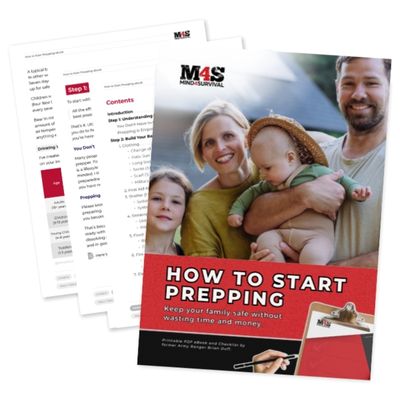
Download our free 39-page guide with interactive, 7-Day Emergency Kit Checklist and take the first step toward real preparedness.
- Know exactly where to start.
- Save time and money.
- How-to build a complete Basic Emergency Kit.
- Level up your safety and security.

Join Mind4Survival
Stay informed by joining the Mind4Survival! 100% Secure! 0% Spam!
Thank you for such a great article. As I read through the Ooda loop, I revisited my incident with 2 young punks in a hospital parking lot waiting for my husband during Covid 19 shut- down. At 3:30 in the afternoon they attempted to steal my husband’s Dodge Ram… with me in it! I reviewed my response to realize how quickly I went through this loop. Because of all my gun safety training, all if my reactions took no forethought and I responded in confidence and I hijacked their brains when they attempted to hijack mine. Assessing their youth and fear as they approached the truck was so critical. I would have reached completely different if I had looked into the evil eyes of a tall x-con pointing a 45 at my head over the half closed window instead of a 380 from 4 ft away in the hands of a jittery 17 year old.
One of the great things from your comments is that you’re already thinking about the most effective responses in the event you ever encounter a tall x-con pointing a 45 at your head. Keep it up! Stay safe! ~Brian
Thank you for such a great article. As I read through the Ooda loop, I revisited my incident with 2 young punks in a hospital parking lot waiting for my husband during Covid 19 shut- down. At 3:30 in the afternoon they attempted to steal my husband’s Dodge Ram… with me in it! I reviewed my response to realize how quickly I went through this loop. Because of all my gun safety training, all of my reactions took no forethought and I responded in confidence and I hijacked their brains when they attempted to hijack mine. Assessing their youth and fear as they approached the truck was so critical. I would have reacted completely different if I had looked into the evil eyes of a tall x-con pointing a 45 at my head over the half closed window instead of a 380 from 4 ft away in the hands of a jittery 17 year old.