
Podcast: Play in new window | Download
Prepping 101: The 7 Essentials You Actually Need
TL;DR—Prepping is the proactive work of building the skills, supplies, and mindset to handle any crisis—big or small—while minimizing unwanted struggle. A prepper is simply someone who does that work on purpose. Below are the 7 essentials: know what prepping is, assess your risk, build a plan, pack an emergency kit, secure your home, learn core skills, and keep monitoring and adjusting.
Are you ready to be prepared for anything life throws at you?
Prepping is for everyone—including everyday folks like you and me who want to be ready for both big disasters and life's little curveballs.
Drawing on my background in security, crisis management, and preparedness—from serving as a Special Operations team leader to advising international security operations, working as a paramedic, and a bachelor's degree in Security Management—I'll distill real-world experience into practical advice for how you think about, and act on, prepping.
What Is Prepping?
Prepping is the proactive work preparedness-minded people do to become safer, more confident, and self-reliant—so they and their families can face any crisis, minimize unwanted struggle, and live their best possible lives. It's not only about disaster scenarios; the same mindset and skills help with job loss, medical emergencies, and everyday curveballs. A prepper is simply someone who does this on purpose, without needing to buy into any doomsday stereotype.
The fundamentals behind everything below are mindset, situational awareness, survival, safety, and self (M4S). It's an easy-to-remember system for covering your prepping needs from the basics all the way to a real plan your family can act on. See the fundamentals of prepping for the deeper walkthrough, or Are Preppers Crazy? if the label itself is what's holding you back.
Now here are the 7 essentials that turn that mindset into action.
1. Assess Your Risk
Risk management—the process of objectively managing your risks—is essential for a balanced approach to preparedness. By objectively assessing the risks tied to what you want to protect, you can determine where to focus your effort.
The Three Risk Management Questions
As my good friend and risk management expert, Ed Clark, CEO of Executive Interface, teaches, risk can be summarized by asking yourself three questions:
- What do I have to protect? This tells you your assets—the things you're protecting.
- What do I have to protect it from? This tells you your threats.
- What do I have to protect it with? This tells you your vulnerabilities.
The objective process involves quantifying the impact of potential losses, the ability of threats to cause harm, and how vulnerable each asset is. Run those factors through the risk formula and you get a risk score for each asset—letting you rank what's at greatest risk and guide how you allocate time, money, and supplies.
2. Develop a Plan
Creating a comprehensive plan is crucial for effective prepping. It should cover the scenarios identified in your risk assessment, and it becomes the guide for your preparation efforts.
1. Outline specific actions for each identified risk
For a natural disaster, detail your evacuation routes, safe meeting points, and emergency contacts. For economic trouble, plan financial reserves, asset diversification, and alternative income skills.
2. Build a communication strategy
Determine how you'll stay in touch with family if conventional methods fail. Consider alternative tools like satellite phones or ham radios.
3. Expand your emergency kit by stockpiling essentials
List water, food, medication, and anything your family needs to maintain as normal a life as possible. The goal is self-sufficiency for several weeks or more.
4. Practice your plan regularly
Drills reveal gaps in your strategy and familiarize your family with the procedures, reducing panic when it counts.
3. Build an Emergency Kit
As someone who's spent decades dealing with life-and-death survival situations, I've seen firsthand how crucial a well-prepared kit can be. Here's how to build one based on the Survival Pyramid.
Mindset
Before the physical items, remember that your mindset is your primary survival tool. Cultivate resilience, adaptability, and a proactive attitude—the foundation for effective decisions under pressure.
Situational Awareness
Your kit should start with items that help you assess your environment quickly: a durable, waterproof flashlight, a GPS or compass with a map, and a radio for up-to-date information.
Immediate Action Supplies
For scenarios requiring swift action, include a high-decibel whistle, a self-defense item, and a reliable multi-tool—items that let you signal for help and protect yourself in a devolving situation.
Oxygen to the Brain
As a paramedic who's treated hundreds of trauma victims, I know keeping oxygen-enriched blood moving to the brain is a critical survival skill. Pack quality tourniquets, hemostatic dressings, pressure bandages, CPR masks, and chest seals—and get trained on CPR and bleeding control, because gear without skill is a recipe for disaster.
Shelter
Pack lightweight, waterproof clothing, a sturdy pair of gloves, and a compact emergency blanket or shelter to protect against the elements. See Emergency Shelter Considerations for more.
Hydration and Sleep
You can't go longer than 72 hours without water or sleep before side effects set in. Water purification tablets, a way to boil water, or a compact filter like the Sawyer Mini are must-haves—and don't skip sleep; I pack a trusty poncho liner for exactly that reason. See How to Source Water During an Emergency.
Food
Stock high-calorie, nutrient-dense emergency food with a long shelf life. Look for a balance of protein, fats, and carbohydrates, and know how many calories you're carrying so you can plan meals accordingly.
Society: Supplies to Communicate
You can't pack a community into your kit, but you can include a durable, hand-crank emergency radio and a compact set of writing materials to leave messages or keep a journal. See Two Is One, One Is None for how to think about redundancy across your whole kit.
4. Secure Your Home
From natural disasters to societal unrest, fortifying your home is a critical prepping step—securing your property's perimeter, exterior, and interior to withstand threats.
- Perimeter security. Fences that are tall and hard to climb, driveway sensors, perimeter lighting, and the strategic use of dogs as both a deterrent and an early warning system.
- Exterior fortification. Solid, secure doors with reinforced frames and quality locks, especially at garage doors and windows—common entry points. Add security film to windows and, budget permitting, upgrade to metal doors.
- Interior defense. Solid core doors for key areas, and consider a safe room stocked with emergency supplies and fortified against forced entry.
- Comprehensive monitoring. Security cameras and a home security system for continuous alerting and situational awareness.
See Security.Org for more on comprehensive security measures.
5. Learn Essential Survival Skills
Acquiring survival skills is as vital as gathering supplies. Here are the core competencies every prepper should master.
- Conflict de-escalation. Defuse tense situations through communication—a calm demeanor, non-threatening body language, and active listening—before it becomes physical.
- Self-defense. Knowing how to protect yourself matters even when avoiding conflict is the better first move. Regular training keeps your response sharp when a threat is real.
- First aid. Learn to treat life-threatening and non-life-threatening wounds, from fractures to common medical emergencies.
- Fire starting. Practice multiple methods—matches, lighters, flint and steel—so you can create a flame in any weather for warmth, water purification, and cooking.
- Shelter building. Practice constructing shelter from natural or man-made materials in different environments.
- Water purification. Plan on one gallon of drinking water per adult per day, and know boiling, chemical, and filtration methods for making unsafe water drinkable.
- Navigation. Learn to read a map and use a compass, and practice reading natural landscapes for direction, in case modern technology isn't available.
6. Monitor and Control
The last step emphasizes ongoing vigilance and adaptability. Life changes, and so do the challenges you might face—this step keeps your plan honest.
- Stay informed. Keep an eye on current events and emerging risks so you can anticipate rather than react.
- Review supplies. Check expiration dates and gear condition periodically, and replace or replenish as needed.
- Adapt your plan. Changes in family size, location, or finances may call for adjustments—reevaluate your risk assessment as your situation changes.
- Keep learning. The more you know, the better prepared you are, against a wider range of challenges.
The Prepping Bottom Line
Prepping isn't about being a doomsday prophet or an extreme survivalist. It's simply about being smart and ready for whatever life throws your way.
Prepping may feel overwhelming at first, but take it step by step. Start with the essentials above and grow from there—there's no need to do it all at once.
And remember, prepping is about more than survival—it's peace of mind. Knowing you've done your part to protect yourself and the people you love is priceless.
Ready to put this into action? How to Start Prepping: Beginner's Emergency Guide walks through your first concrete steps.
Prepping FAQ
Bug-out bags (BOB) are emergency kits designed to provide essential resources in a sudden evacuation or crisis—typically self-defense items, first aid supplies, clothing, water, and emergency food, enough to sustain you for a short period while you reach safety. See a full list of the essentials.
Bugging in means staying at your own home or primary residence during a crisis, based on the assessment that remaining in place is safer than attempting to evacuate. See the Guide to Bugging-In.
Bugging out means quickly leaving your home during a crisis to seek safety elsewhere—also known in the prepping community as Get Out of Dodge (GOOD). It typically involves a predetermined Bug-Out Location and a Bug-Out Bag prepared with essential supplies for the journey. See my thoughts on Bugging-In vs. Bugging Out.
A Bug-Out Location (BOL) is a predetermined safe haven—a remote cabin, a friend's house, or another prepared site—with access to water, food storage, and shelter, located away from likely threats. See a budget-friendly option if a dedicated BOL feels out of reach.
Everyday Carry (EDC) is the set of practical items—cash, a pocket knife, a flashlight, a multi-tool, personal defensive items—you carry daily so you're ready for whatever comes up. See Everyday Carry Essentials.
A grid-down event is a large-scale disruption of the electrical grid—from disrepair to coronal mass ejections, EMPs, or attacks on grid infrastructure. Because modern life depends on electricity, an extended grid-down event is catastrophic: no heat, no fuel pumps, no functioning hospitals. Read a first-hand grid-down experience.
An Individual First Aid Kit (IFAK) is a compact, portable medical kit for treating injuries in an emergency. Because you never know when an injury will happen, an IFAK is a prepping must-have. See North American Rescue for kit options.
Mutual Assistance Groups (MAGs), also called Mutual Aid Groups, are organized networks of preparedness-minded people who pool knowledge, skills, and resources to support each other during emergencies. See Groups vs. Going Solo if you're deciding whether to join one.
SHTF ("stuff hits the fan") describes a critical situation where societal order breaks down—from a localized riot or power outage to large-scale economic collapse, pandemic, or war. See SHTF Meaning: The What and Why of SHTF Prepping.
TEOTWAWKI ("the end of the world as we know it") describes a catastrophic event, or series of events, leading to a complete collapse of society, infrastructure, and government systems.
The Prepping Library
Wherever you are in the journey—just starting out, tight on budget, or working through the mindset—here's where to go next.
Getting Started
Prepping on a Budget
Mindset & Motivation
Avoiding Common Mistakes
Family & Community
Know the Terminology
Best Seller
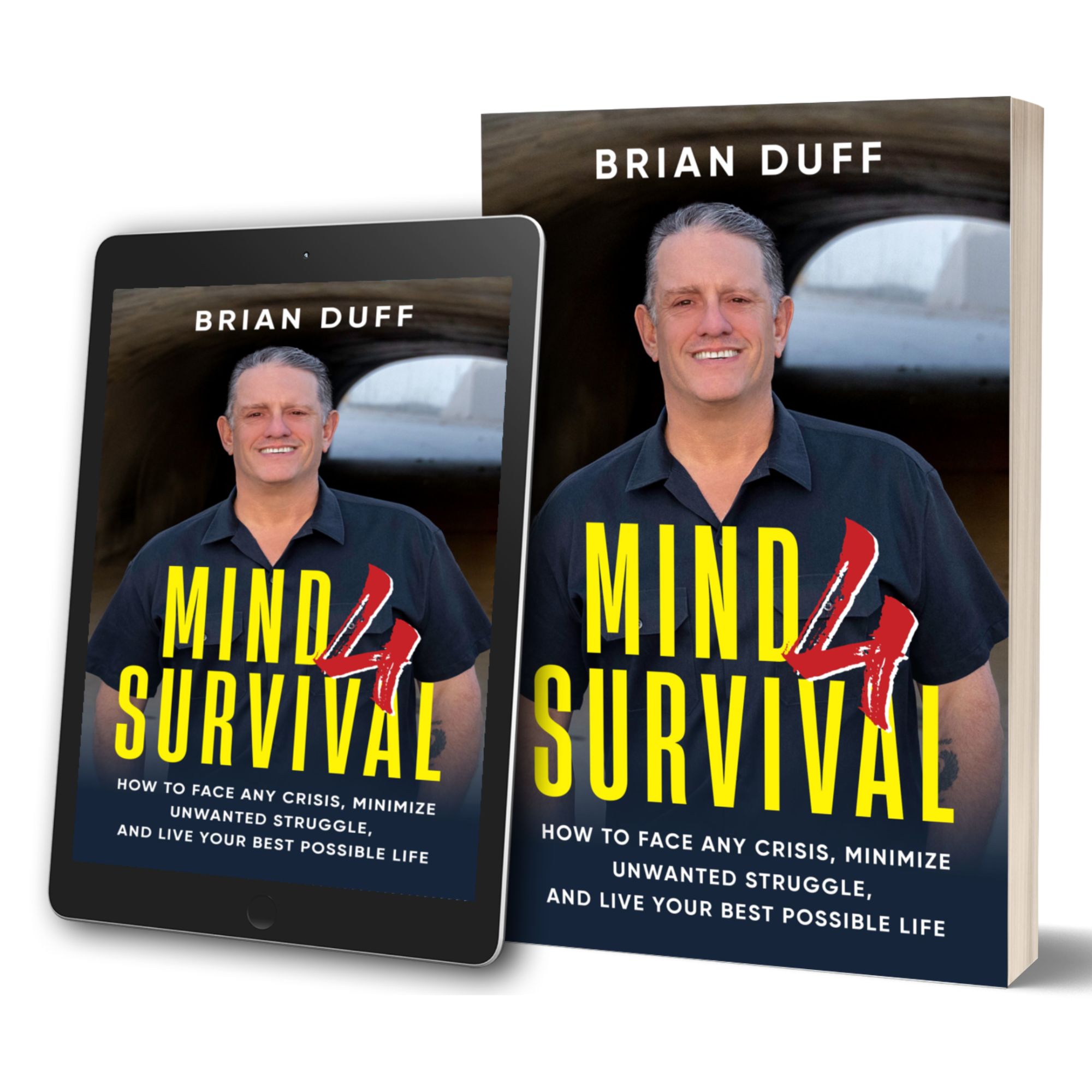
Mind4Survival: How to Face Any Crisis, Minimize Unwanted Struggle, and Live Your Best Possible Life
Every one of the 7 essentials above gets a deeper walkthrough in the book, with the real stories behind how I learned each one the hard way.
Get the BookKeep Going
New episodes twice a week. Mindset, situational awareness, survival, safety, and self—the five fundamentals, every week. Start with Realistic Prepping with Jim Cobb.