Master the OODA Loop: Boost Your Situational Awareness Today
In a crisis, hesitation can cost you. Whether it’s a fast-moving threat or a subtle shift in your surroundings, your ability to quickly assess, decide, and act can mean the difference between safety and disaster. That’s where the OODA Loop comes in—a powerful mental model developed for fighter pilots, now embraced by law enforcement, military units, and savvy civilians alike.
In this article, you’ll discover how to use the OODA Loop to sharpen your situational awareness, outthink threats, and gain the upper hand in unpredictable situations. It’s not about paranoia—it’s about staying one step ahead.
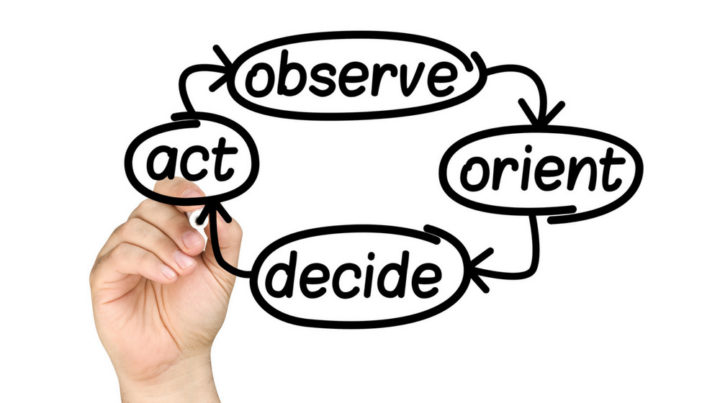
TL;DR: The OODA Loop—Observe, Orient, Decide, Act—helps you make fast, clear decisions in high-stress situations. Your situational awareness keeps you ahead of threats by training you to respond with effective purpose, not panic.
What is the OODA Loop
As I mentioned in the intro, Colonel John Boyd was a U.S. Air Force Pilot and a great military strategist. His OODA loop philosophy helped fighter pilots to combat their opponents better. It did so by helping them to out-think their enemies by using a systematic thought process. This allowed them to make better decisions faster.

Eventually, it proved so useful that it became a primary core philosophy of preparedness that applies to all aspects of life, business, and survival.
Let's break down the OODA Loop situational awareness philosophy step by step.
Step 1: Observe
Preparing for a situation like this is not difficult. What is difficult is identifying the problem, or in this case, the threat. There are far too many examples of people needlessly suffering because they failed to recognize a problem was about to occur. They failed when the issue should have been identifiable.
Therefore, do not fail; start every day with a commitment to yourself. You must commit to using your powers of observation and situational awareness to identify developing situations. Does this mean you move throughout your day, paranoid and on edge? No, it means you listen to your gut. It means you take in the environment around you. It means you look for things that you think are not normal.
Also, it means being open to the signals sent by your subconscious. Do you ever get a nervous or anxious feeling for no reason? If you do, it may be your subconscious trying to alert you to something it's picking up. Unfortunately, our subconscious mind, it's not able to speak with us when it detects a possible problem. So, instead, our subconscious tries to alert us through sensations in our bodies. Some call this our sixth sense and they might be right. What is certain though, is for our subconscious mind to alert us to problems, we need to be open to receiving the signals it sends us.
Step 2: Orient
When you do observe something that doesn't seem reasonable or makes your sixth sense poke you, you need to take notice. Pay attention to the situation and what is happening around it. Try to identify what it is that doesn't seem right. As you do, you'll be one step ahead, processing the events and figuring out the unfolding situation.
Step 3: Decide
After orienting yourself to the situation, you will decide upon a course of action. That decision may be to do nothing because, in your assessment, the situation isn't threatening, nor even an issue. However, that decision may be to get actively involved as student hero Jon Meis did. If you have young children with you, your decision might be to get out of the area as quickly as possible.
Regardless of what you do, make a decision. Do not stand there, frozen, like a lookie-loo on a Southern California freeway. Make a decision!
Step 4: Act
Once you make your decision, it's time for action. When you initiate your course of action, do so with commitment and determination. Maybe your chosen course of action is to leave the area because there is no threat. If so, then leave while continuing to remain vigilant.
However, if your course of action is like Jon Meis, to become involved, then do so with a 100-percent commitment. Anything less than 100-percent engagement decreases your chances of a desirable outcome. Go hard or go home. So, remember when taking action, be like a momma bear saving her cub; relentless and in total survival mode.
Real-Life Example: OODA Loop in Action
This video illustrates what the actions of one observant, prepared, and brave person can accomplish.
How Jon Meis Used the OODA Loop to Stop a Shooter
In this case, Jon Meis was a Seattle Pacific University student security guard. Meis survived an active shooter incident and saved lives. Meis did so by, knowingly or unknowingly, employing the principles of OODA loop situational awareness. Jon Meis…
- …observed the sound of the shooting.
- …oriented himself to the presence of the shooter.
- …decided to take positive action when the shooter began reloading.
- …acted, disarming the shooter, securing the weapon, and disarming the shooter of a second weapon before he could do further harm.
Jon Meis epitomizes the classic example of OODA loop situational awareness, whether it was deliberate or not. When he quickly became aware of the issue and assessed that it was needed, Jon was ready and willing to take decisive and effective action. In so doing, he saved his life and the lives of unknown numbers of other students.
How the OODA Loop Applies to Everyday Situations

The OODA Loop isn't just for fighter pilots or tactical teams—it's a powerful mental tool that can improve everyday decision-making. Whether navigating a difficulty at work, reacting to a suspicious situation in a parking lot, or adjusting plans during a crisis, the OODA Loop helps you stay ahead by structuring your thought process.
Practical Examples:
Driving and Road Rage
Spotting aggressive drivers (Observe), interpreting their behavior and potential threat level (Orient), choosing whether to speed up, create distance, or exit the road (Decide), and then acting safely to de-escalate or avoid confrontation. Staying calm while executing your decision is crucial to prevent emotionally reactive mistakes.
Home Security Incidents
Hearing a noise at night (Observe), quickly assessing its source—pet, plumbing, or potential intruder (Orient), deciding whether to investigate, call for help, or arm yourself (Decide), and then following through (Act) with full situational control. Practicing this response in advance makes your actions faster and more confident under stress.
Preparedness Planning
Observing global news or rising local tensions (Observe), assessing how they could impact your specific area, resources, or family (Orient), deciding on a logical preparedness step—such as storing more water or updating your evacuation plan (Decide), and then executing that plan before the window to act closes (Act). The OODA Loop ensures your decisions are proactive, not reactive.
When practiced regularly, this loop becomes second nature—enhancing your situational awareness and ability to make calm, confident decisions under pressure.
How to Practice the OODA Loop Daily
The OODA Loop isn’t just a concept for fighter pilots or high-risk professionals—it’s a mindset tool you can use in everyday life. Practicing it regularly helps you stay alert, process information faster, and respond with calm confidence, even under pressure.
Here’s how to work it into your daily routine:
Observe: Start Every Day With Awareness
Before you step out the door, take a moment to scan your environment. What’s normal? What stands out? Notice sounds, smells, movements, and moods—especially anything that doesn’t fit the usual baseline.
Quick Tip: When entering a new space (grocery store, parking lot, event), pause and do a 5-second scan—front, sides, behind.
Orient: Check Your Internal Compass
Orienting isn’t just about where you are physically—it’s how you’re interpreting what you observe. Ask:
-
“What does this mean in context?”
-
“Am I bringing past bias into this situation?
-
“Is my gut trying to tell me something?
Tuning into your surroundings and your subconscious alerts strengthens your ability to detect subtle changes.
Decide: Make Intentional Micro-Decisions
The more you practice small, everyday decisions (where to sit in a room, how to approach a conversation, whether to take a different route), the easier it becomes to decide quickly under stress.
Train yourself to make decisions based on logic and values—not fear or hesitation.
Act: Follow Through with Commitment
Once you decide, act. Whether it’s stepping away from an uncomfortable situation or intervening to prevent something worse, your ability to act deliberately is what closes the loop.
Pro Tip: Practice taking action with presence—even small actions like changing your routine or initiating a conversation build decisiveness.
Daily OODA Loop Habit Checklist
Did I…
- …scan for changes in my environment today?
- …check in with my gut or subconscious signals?
- …make one intentional, informed decision?
- …take an action that aligned with my goal or values?
The more you cycle through OODA with intention, the faster and more natural it becomes—until awareness and decisive action are second nature. That’s how you stay ahead, not paranoid.
The Bottom Line: Stay Ahead with Situational Awareness
If you follow the basic premise of the OODA loop situational awareness philosophy, you can become better prepared to overcome difficult situations that may arise.
By noticing what goes on around you earlier, making better decisions faster, and taking confident action, you will help yourself be better able to survive and thrive in any situation.
Have you ever used the OODA Loop in a real-world situation? Share your experience or tips in the comments below—your insight could help someone else stay safer and more prepared!
Additional Resources
- Situational Awareness: Staying Alert and Staying Safe
- How to Spot Trouble Before It Starts: Situational Awareness Tips
- Master Situational Awareness (Effective Decision-Making)
- OODA Loop: Your Secret Weapon
Frequently Asked Questions About the OODA Loop
OODA stands for Observe, Orient, Decide, and Act—a four-step decision-making cycle developed by U.S. Air Force Colonel John Boyd to help individuals outmaneuver opponents by making faster, smarter choices.
The OODA Loop forces you to actively analyze your environment so that you are prepped to make the best decisions possible By practicing it regularly, you build mental agility and reduce hesitation in high-stress or fast-moving situations.
Not at all. While it began in military aviation, the OODA Loop is now used in business, emergency preparedness, self-defense, and daily life—anywhere quick, effective decisions are critical.
Yes. Teaching children to observe their surroundings, notice when something feels off, and make decisions based on logic rather than fear can help them stay safer and build confidence in emergencies.
Start by slowing down your reactions to evaluate your surroundings when entering new environments—parking lots, crowded events, unfamiliar neighborhoods. Mentally walk through the OODA steps until it becomes second nature.
Related Articles
FREE Guide
Read the Best Seller
Join Mind4Survival
Stay informed by joining the Mind4Survival! 100% Secure! 0% Spam!
Affiliate Disclosure...
Mind4Survival is a free, reader-supported information resource. If you make a purchase through our link, we may, at no cost to you, receive an affiliate commission.
Do You Want To Be Ready No Matter What?
Download our free 39-page guide with interactive, 7-Day Emergency Kit Checklist and take the first step toward real preparedness.
- Know exactly where to start.
- Save time and money.
- How-to build a complete Basic Emergency Kit.
- Level up your safety and security.
Join Mind4Survival
Stay informed by joining the Mind4Survival! 100% Secure! 0% Spam!

Thank God for people like Brian Duff and Jon Meis, plus ALL OF THE OTHER BRAVE PEOPLE OUT THERE !!!!!
Thanks, Larry! My apologies for not seeing your awesome comment earlier. Stay safe! ~Brian